In an age when a smart phone's camera can send a digital image clear enough for a doctor on the other side of the world to accurately diagnose skin conditions, or an eye scanning device for under $100 attached to the same smart phone can give any patient an accurate prescription (thanks MIT) without necessitating the purchase of a $100,000 phoropter, many wonder if we still need doctors in the traditional sense.
 |
| Is this a better choice in the developing world than an iPhone? |
Many of the most needed and life saving surgeries in the developing world require only modest training a few years past high school, and nurses and their associates can be supremely useful and priceless when and where doctors are decidedly lacking. Particularly in the developing world, where medical training in general - and doctors in particular - are in low supply and high demand, it makes a great deal of sense to abandon the West's rigid interpretation that to be a "doctor" one must have spent a decade (or more) and up to hundreds of thousands of dollars in the Academy. Yet to devalue doctors, whether in the first or the third world (and everywhere in between) is to do not only the profession and its practitioners, but also the societies they practice in a grave disservice.
Coming from a major medical family - my Dad is an MD and my Mom, among other things, a registered nurse - might give me a pro-doctor bias. However it also gives me a window into the world of the classically trained health professional. I know firsthand the wild and profound knowledge great health care professionals (and perhaps especially MDs) have at their disposal at all times. Countless times I have made use of just such knowledge for my own selfish aims. My parents are generally able to quickly - and accurately - answer my health related questions and even on occasion diagnose my woes. A relatively unromantic bout of likely food poisoning comes to mind as the latest example (thanks Bonnaroo 2010!).
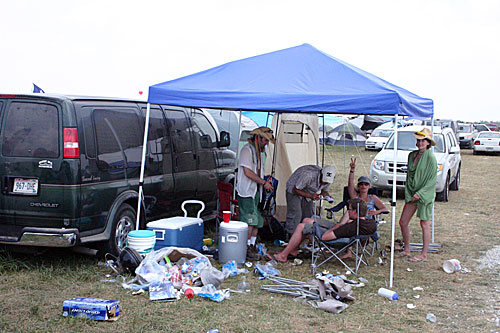 |
| Make sure to adequately cook all raw meat. Refrigerating it is also a plus. |
While the years and dollars spent acquiring such knowledge (and degrees) may be more worth it to some than others - however they define that "worth" - the knowledge and skills that doctors and other medical professionals learn and practice over years are profoundly important and irreplaceable. At the end of the day I don't know a single person who would prefer we lived without such vital human resources, or would rather diagnose themselves or a loved one than get the best medical advice they could from a professional.
However, as with many elements of this, our New World, technology and the increasing interconnectedness of people across vast distances and economic barriers must elicit changes in how we view the medical profession - and doctors in particular.
Perhaps gone are the days when the only people to turn to are women and men in long white lab-coats with stethoscopes hanging around their necks. Instead of referring only to the MDs - especially in the developing world where they are too few and far between - people must seek other alternatives, but I would argue they must be connected to and communicating with doctors. This is where the future lies - doctors as references and ideal resources for those with less experience, or ability to get the same education that the top-notch university systems provide. Instead of either relying on outdated and incomplete medical information or turning patients away due to a lack of material and experience-based resources, we must connect classically trained doctors with those aspiring to provide fundamental medical treatments where doctors are not available.
Global technology and communication systems provide an intriguing and elemental connection here - we must encourage and ideally incentivize doctors to reach out and give their time and knowledge to those in the developing world who are eager to learn and help the sick in their own communities. Whether this means having doctors send SMS messages from hospitals and universities to health care providers across the globe or instituting web-based platforms whereby medical questions and problems can be quickly asked and answered seems relatively unimportant. In fact that has been a profound lesson of this class - the specific technology used is less important than the fact that technology is merely a means to the end of meaningfully connecting people throughout the world. Whether medical instructors and practicing doctors spend their weekends communicating with those in need of assistance or retired MDs take some time out of their post-career lives to do the same is also relatively inconsequential. The fundamental medical skills and knowledge that so many doctors possess does not fade with time - nor does their interest in helping others be well.

We must encourage any and all doctors to get involved and - with or without discernible reward or recognition - to get in touch with a program or an individual community in need of guidance and inspiration. While programs like Doctors Without Borders are wonderful, if troubled, realizations providing medical resources and doctors to the developing world, they seem a somewhat misguided solution. Instead of merely exporting medical talent and aspiration abroad, we must actively encourage its growth at the source. By providing information and medical skills remotely, home-grown medical professionals and semi-professionals can increase their own skill sets and desire to continue the everlasting quest of profound medical knowledge. This is not to degrade such programs or to suggest that only by "providing" medical insight and knowledge will a developing nation develop its own medical infrastructure - I am extremely uncomfortable hearing the post-colonial alarm bells ringing in my own head. This is only to say that classically trained doctors can be useful beyond their small locales and borders - they can provide meaningful benefits to people throughout the world. Western medicine may be no better or productive than local remedies (although I would say it is - but that's the seed for another, somewhat more controversial, blog), but in a field like medicine don't we need all the knowledge and training we can muster to help individuals in need of attention and health?
 |
| You know you like them. |
Ultimately then this is a call to arms - for doctors and nurses, medical teachers and students alike - to get involved beyond their own hospitals or universities. Whether they travel bodily to a developing nation to help the sick and heal the injured is not as important as that they do get involved and communicate with interested parties abroad. We can no longer afford to heal our own at the expense of the global sick - and thanks to advances in communications technologies, perhaps we won't ever have to again. One doctor's medical knowledge belongs not to that individual, her/his practice or clinic, nor even to their nation.
Medical knowledge and above all health is a public and global good - and it is morally indefensible not to treat it as such.

Great post as always. I think your notion that the exclusivity of being a doctor should not get in the way of more people knowing more medical information is very interesting and potentially positive for millions across the globe. The only main concern I have with this is that I fear a consequence of teaching medical information to the masses will lead to a lowering of the prestige and desire for young people to become doctors. Being a doctor, like all professions, is about supply and demand. If more and more people know how to do the things that doctors are suppose to do, than the demand for doctors will decrease. Thus doctors will make less money and less people will desire to become a doctor due to the lower pay.
ReplyDelete